


The Ofsted revised framework explained: a guide for families
Ofsted has implemented a revised framework for inspections from November 2025.
The revised Education Inspection Framework (EIF) sets out how Ofsted inspects schools: it determines what inspectors look at, how evidence is gathered and how grades are determined.
Ofsted inspects to:
- Raise standards and improve lives for all learners
- Assure quality and safety of education and care
- Inform parents and policymakers for better choices and accountability.
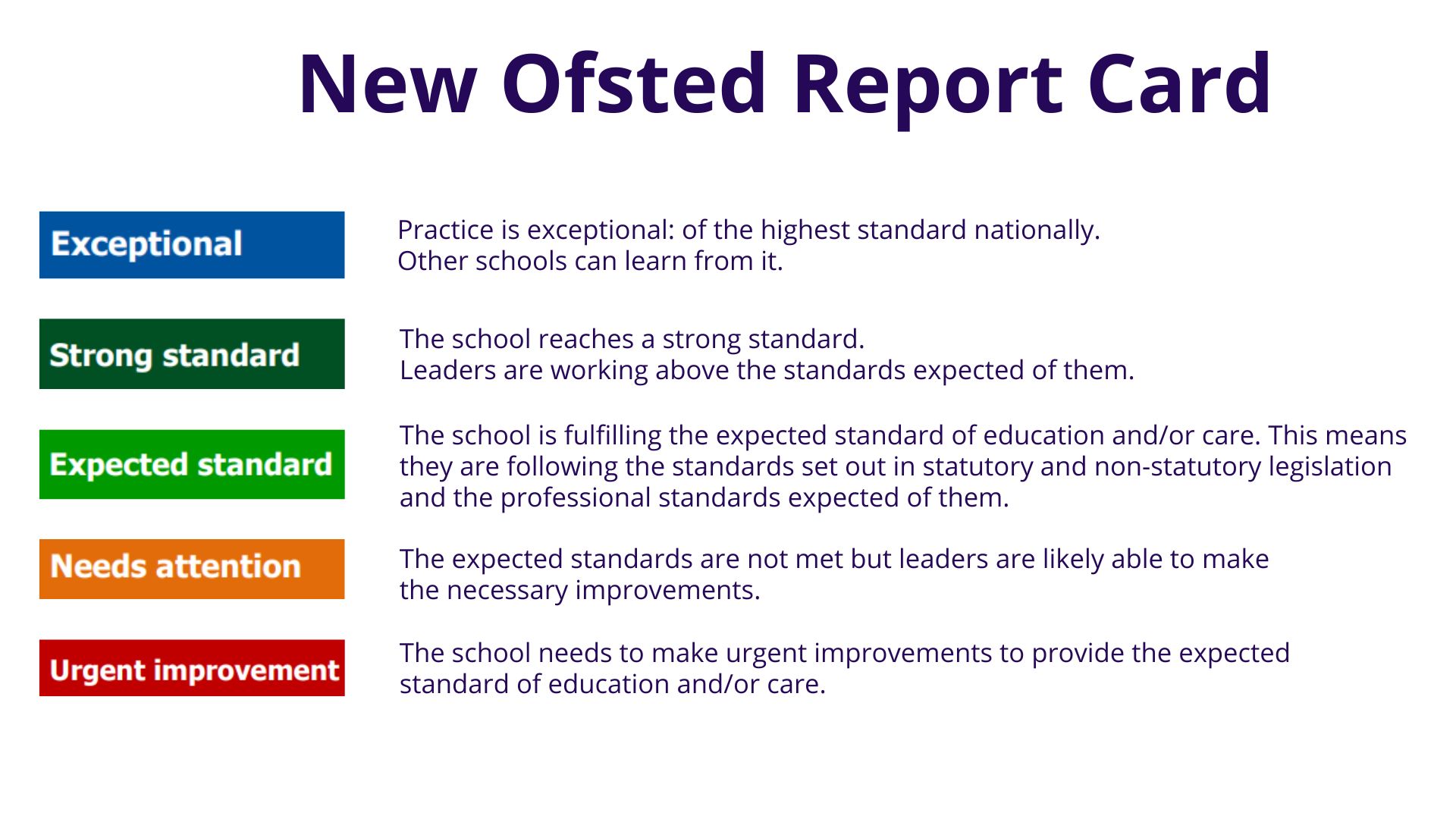
The revised framework sees schools being assessed using a five-point grading scale, across at least six different evaluation areas. The key change is that schools are no longer given a single overall effectiveness grade, but each evaluation area is graded on a five-point colour-coded scale:
Evaluation areas
Inspectors now determine grades across several evaluation areas. For state schools these include:
- Inclusion
- Curriculum and Teaching
- Achievement
- Attendance and Behaviour
- Personal Development and Wellbeing
- Leadership and Governance
Safeguarding is not graded on the same scale, but inspectors judge whether safeguarding is met or not met.
What the revised framework means in terms of grades: analysis
Each evaluation area is graded separately This means schools could have mixed grade profiles on their report card. Previously, the overall effectiveness grade would have averaged out these grades. Now, parents will be able to see clearly the areas of strength in a school and where they may need to focus attention on their practices.
Ofsted has said that it will only give their very highest “exceptional” grade when it sees practice that is “among the very best nationally, which should be shared with other schools or providers to help them improve”.
The implication of the revised framework is that the expectation of an “exceptional” judgment will be a rarer sight than the previous “outstanding”.
No comparison between previous and revised grades
The revised grading structure is fundamentally different from the previous one, and the measures used are not directly comparable. A change in grade under the new system does not reflect a decline or improvement in performance; it simply reflects a new assessment approach.
New Ofsted report cards and grades: a guide for parents